First-Party Data Activation in Marketing: 2026 Practical Guide
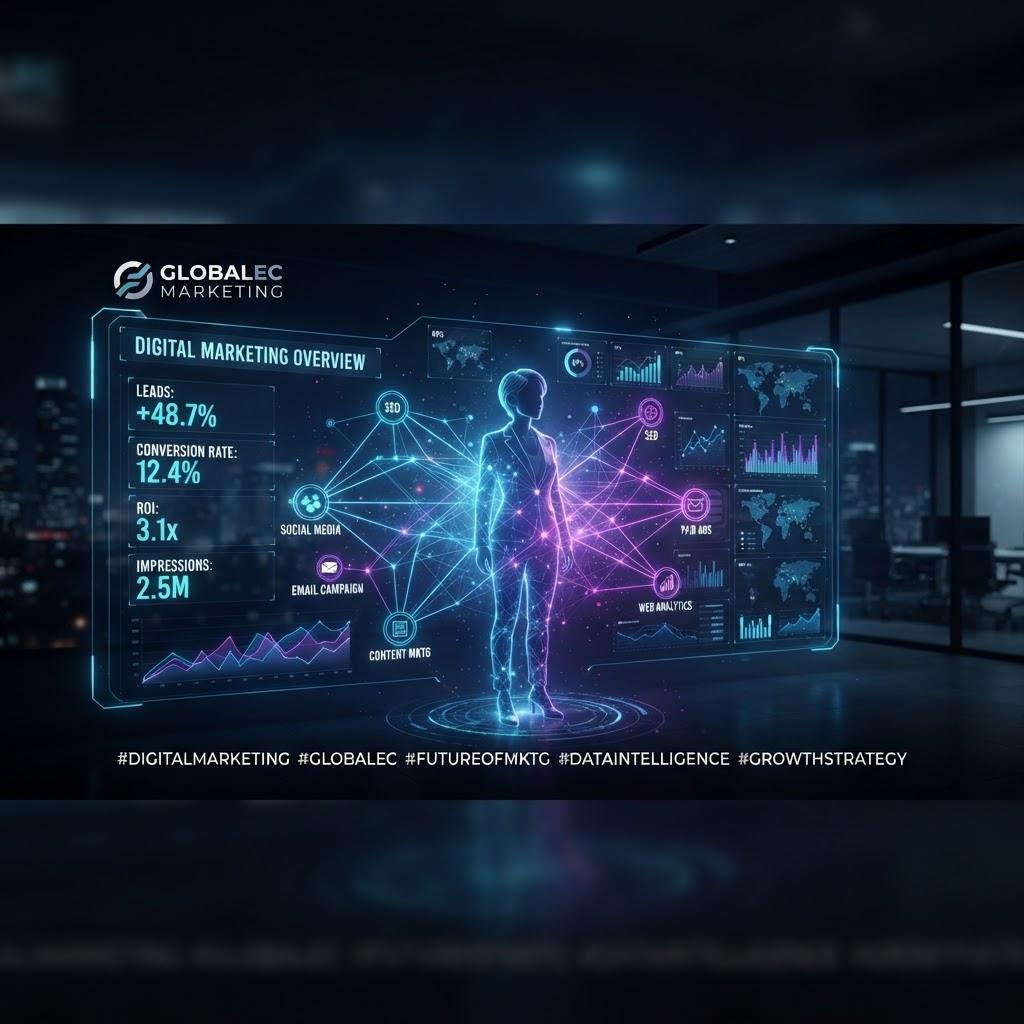
Learn how to turn your database into a competitive advantage through first-party data activation in marketing. Discover how to implement advanced segmentation strategies to maximize the ROI of your campaigns in 2026.
First-Party Data Activation in Marketing: 2026 Practical Guide
In the 2026 digital ecosystem, user privacy is no longer an obstacle, but the fundamental pillar upon which profitability is built. First-party data activation in marketing has consolidated itself as the definitive strategy for companies in Latin America to stop relying on third-party cookies, which have completely disappeared from the global advertising landscape.
For brands in our region, this means moving from mere passive collection to an intelligent orchestration of the information that customers voluntarily share. Understanding this paradigm shift is the difference between leading the local market or being relegated to the background against competitors who already dominate the data lifecycle.
Advanced Personalization and the End of Traditional Segmentation
The era of generic personalization has ended. In 2026, Latin American consumers demand experiences that demonstrate a deep understanding of their immediate needs. Advanced personalization is not about inserting a name in an email subject line, but about anticipating the customer's next step based on their browsing history, previous transactions, and declared preferences.
Recent statistics from this year indicate that 78% of consumers in LATAM are more likely to make a purchase when the brand uses data collected directly on the website to offer complementary products. Furthermore, the adoption of predictive value models (LTV) has allowed companies to reduce their customer acquisition cost (CAC) by 22% during the first half of 2026.
By integrating information silos that were previously disconnected—such as offline purchase history with digital behavior—companies achieve a 360-degree view. Predictive value models now allow for the real-time classification of customers, prioritizing advertising investment toward those profiles with the highest propensity for recurrence or upselling.
Practical Strategies for Data Activation
Successful implementation requires a strategic move from data accumulation to real-time execution. It is not enough to have a robust Data Lake if the information does not flow to sales channels.
Here are the key strategies to transform data into revenue:
- Dynamic Profile Enrichment: Use satisfaction surveys and preference centers so that the user voluntarily completes their profile in exchange for added value.
- Intent-Based Activation: If a user repeatedly visits a category without purchasing, trigger a personalized offer based on their specific interests through automated channels.
- Implementation of Zero-Party Data Strategies: Create interactive experiences (calculators, quizzes, product configurators) to capture data on future purchase intentions.
- Omnichannel Synchronization: Ensure that data integration between the CRM, e-commerce platform, and customer service tools is bidirectional.
- Segmentation by Recent Behavior: Stop using static lists and use dynamic segments that update hourly based on user navigation.
Behavior-Based Marketing as a Guiding Principle
Behavior-based marketing is the engine that keeps the customer relationship alive in an environment where attention is the scarcest resource. In 2026, algorithms have evolved to recognize patterns that go beyond a simple "click." Today, scroll speed, time spent on technical descriptions, and interaction with multimedia elements define a user's intent score.
For these strategies to work, the focus must be on immediate activation. If a user abandons a cart with a specific configuration, the system must be able to send a help message or a personalized incentive in less than ten minutes. Agility in response, fueled by the right data, turns a potential loss into a guaranteed conversion.
Success Stories and Context in Latin America
The reality of Latin America is unique due to high mobile penetration and the accelerated adoption of digital wallets. In Mexico, a fashion retail chain implemented a first-party data activation in marketing strategy that integrated its mobile app interactions with its physical store data.
By identifying that customers who checked sizes in the App before going to the store had a higher conversion rate, the brand began sending "in-store availability" notifications based on geolocation. The result was a 35% increase in foot traffic and a notable rise in customer loyalty, surpassing previous years' metrics.
Another relevant example occurred in Colombia, where an insurance portal applied predictive value models to identify the exact moment their customers would be interested in renewing or expanding their coverage. By personalizing messages based on life events (such as the purchase of a vehicle or a change of address), the company reduced its churn rate by 14 percentage points in less than eight months.
Tools and Key Steps for Implementation
The transition toward a data-driven culture does not happen overnight. Technology is an enabler, but strategy is what dictates success. At GlobalEC Marketing, we observe that the most critical steps for any company in our region are:
- Asset Audit: Identify where the most valuable data resides. Is it in your CRM? Your sales records? Your web forms?
- Cleaning and Normalization: Incorrect data is more dangerous than no data at all. Implement validation protocols at all capture points.
- Selection of the Tech Stack: Choose tools that allow for interoperability. Data integration is deficient when tools cannot communicate with each other through open APIs.
- Governance and Privacy: Ensure that all processes comply with local data protection regulations, generating trust from the first point of contact.
- Continuous A/B Testing: No predictive model is perfect from its inception. Optimization based on real results is what allows a strategy to gain relevance over time.
Conclusion
The year 2026 presents us with a scenario where competitive advantage lies not in who has the most data, but in who knows how to activate it with greater precision and relevance. First-party data activation in marketing is the gold standard for brands that seek to transcend invasive advertising and build long-term value relationships.
If your company is looking to navigate this digital transformation with the backing of experts, at GlobalEC Marketing, we have the necessary experience to integrate your systems and design strategies that turn your data into profitable assets. The evolution toward more human and efficient marketing is possible when you have the right data architecture.
Let us be your strategic partner in implementing these cutting-edge solutions in Latin America and Europe. The future of your brand is defined today by the quality of the connections you build with your customers; it is time to start capitalizing on that information.
GlobalEC Marketing
Ready to apply these strategies?
We are specialists in Digital Marketing. Tell us about your project and we will help you grow.